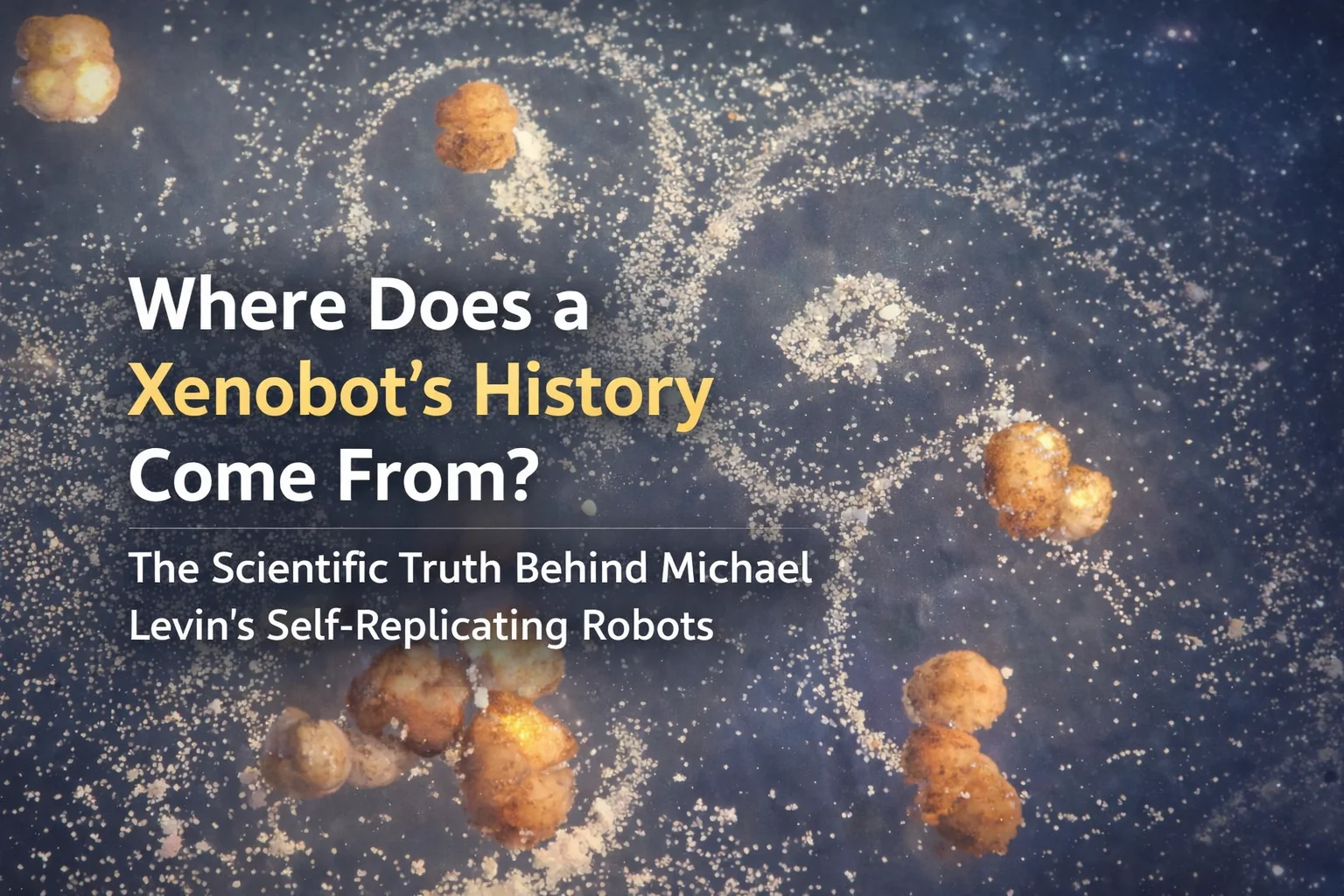
Where Does a Xenobot’s History Come From? What Pays the Computational Cost?: The Scientific Truth Behind Michael Levin’s Self-Replicating Robots and “Free Lunches”
Xenobots History: The Scientific Truth Behind Michael Levin’s Self-Replicating Robots
Are Xenobots Real? A Critical Analysis of the Science vs. the Hype
If you’ve watched Michael Levin’s videos about xenobots and wondered whether the science holds up to scrutiny, you’ve come to the right place. The short answer: Levin’s empirical work on these self-replicating biological robots is genuinely groundbreaking. His philosophical interpretation? That’s where things go spectacularly wrong.
Let’s examine the xenobots history, separate the remarkable science from the mystical nonsense, and explain what these living robots actually tell us about biology, without requiring belief in Platonic forms hovering in mathematical heaven.
What Are Xenobots? The Basic Xenobots Explanation
Michael Levin and his team at Tufts University have created something legitimately astonishing. They took ordinary frog skin cells (Xenopus laevis, hence “xenobots”), removed them from their normal developmental context, and watched as these cells spontaneously reorganized themselves into swimming, maze-navigating, self-replicating organisms that have never existed in evolutionary history.
The first xenobots, reported in the Proceedings of the National Academy of Sciences in 2020, emerge within 48 hours with no genetic modification, no evolutionary selection pressure, no blueprint. As Kriegman and colleagues write in their abstract: “Living systems are more robust, diverse, complex, and supportive of human life than any technology yet created. However, our ability to create novel lifeforms is currently limited to varying existing organisms or bioengineering organoids in vitro.” Their solution: “AI methods automatically design diverse candidate lifeforms in silico to perform some desired function, and transferable designs are then created using a cell-based construction toolkit.”
In 2021, the same team published even more remarkable findings: these xenobots can self-replicate through “kinematic replication,” gathering loose stem cells and assembling them into functional offspring. As lead author Sam Kriegman states: “These are frog cells replicating in a way that is very different from how frogs do it. No animal or plant known to science replicates in this way.”
This is the kind of work that should prompt every developmental biologist to reconsider fundamental assumptions about what genomes encode. Are xenobots real? Absolutely. Do they work the way Levin claims? That’s where we need to dig deeper.
The Question That Reveals Everything
Before we dive into mechanisms, let’s expose the sleight of hand in Levin’s framing.
When Levin asks “When was the computational cost paid to design xenobots?” he’s asking the same kind of question as:
- “If phlogiston doesn’t exist, is fire still hot?”
- “If élan vital is false, are organisms actually alive?”
- “If luminiferous aether was imaginary, does light still propagate?”
- “If there’s no inner homunculus, who’s pushing the neurons around?”
- “If there’s no Platonic algorithm, why does the code still sort the list?”
- “If there’s no soul, who exactly has been doing the breathing?”
Each question confuses:
- The phenomenon (fire burns, organisms metabolize, neurons fire, code executes, lungs inflate, cells self-organize)
- The discredited explanation (phlogiston, élan vital, aether, homunculus, Platonic forms, souls)
The phenomenon persists after the bad explanation dies because we never needed the bad explanation in the first place.
Fire kept burning after phlogiston was debunked—we just understood it was oxidation, not substance release.
Organisms kept living after élan vital was abandoned—we just understood it was organizational closure, not vital force infusion.
Light kept propagating after aether was eliminated—we just understood it was electromagnetic waves in spacetime, not medium vibration.
Code kept sorting after we stopped believing in Platonic algorithms—we just understood it was constraint propagation through physical substrates, not transcendent mathematical causation.
Xenobots work. The question isn’t “where did the design come from?” The question is: why did we think design required a designer?
How Xenobots Work: The Thermodynamic Reality
And then Levin opens his mouth and ruins it by invoking Plato.
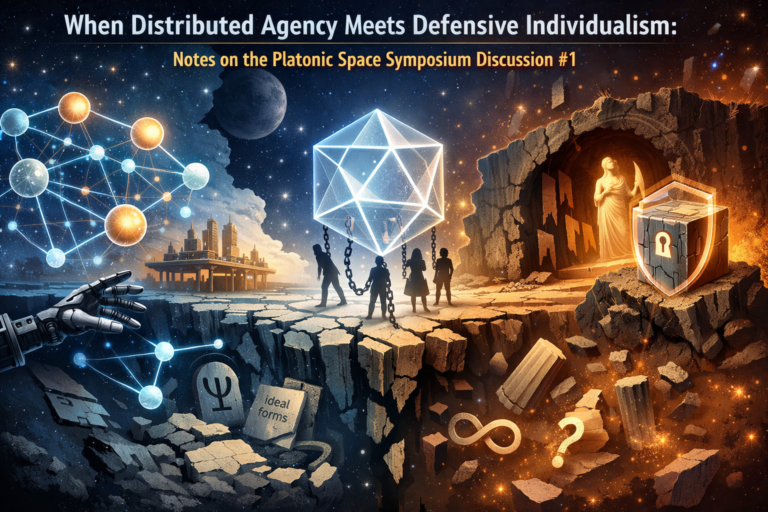
“What evolution is actually doing,” he tells philosopher John Vervaeke in this video, “is making problem-solving machines that can index into certain aspects of this incredible pool of free gifts from mathematics.” He calls this a “neoplatonic view” where “these things exist and it’s on us to sort of index into them and make use of them.”
No. Stop. This is where good xenobots science meets bad philosophy and produces intellectual shipwreck.
The xenobot phenomenon is indeed extraordinary, but understanding how xenobots work requires no mystical appeal to transcendent mathematical forms. What Levin has actually demonstrated is something simultaneously more mundane and more profound: when you remove developmental constraints from cells possessing sophisticated molecular machinery, those cells explore configuration space permitted by thermodynamic and mechanical law until they settle into stable attractors.
The xenobot isn’t a “discovery” of a pre-existing form. It’s a thermodynamic consequence.
🚨 Philosophical Sleight of Hand Alert
Watch how the question shifts:
Legitimate observation: “Xenobots exhibit capabilities not specifically selected for.”
Levin’s move: “Therefore they must be accessing pre-existing forms in morphospace.”
The smuggled assumption: That unexplained = inexplicable by mechanism.
This is the god of the gaps renamed with Greek philosophy. Replace every instance of “Platonic form” with “intelligent design” and the argument structure is identical:
- Identify complexity that seems hard to explain
- Declare mechanism insufficient
- Posit non-physical causation
- Provide no mechanism for the non-physical causation
- Claim this is deeper than mere mechanism
The Discovery Institute explicitly celebrates Levin’s work as supporting their position. That’s not guilt by association—it’s recognition of structural isomorphism.
The Real Xenobots History: From Big Bang to Biological Robots
Let me be blunt about what Platonism contributes to explaining xenobots: nothing. We already have a perfectly adequate framework for understanding how order emerges from chaos without invoking transcendent mathematics. It’s called the thermodynamics of dissipative structures, and Ilya Prigogine won the 1977 Nobel Prize in Chemistry for working it out.
The Nobel Prize committee was explicit about Prigogine’s contribution: “Prigogine’s great contribution lies in his successful development of a satisfactory theory of non-linear thermodynamics in states which are far removed from equilibrium. In doing so he has discovered phenomena and structures of completely new and completely unexpected types.” The committee noted that Prigogine “has been particularly captivated by the problem of explaining how ordered structures, biological systems, for example, can develop from disorder.”
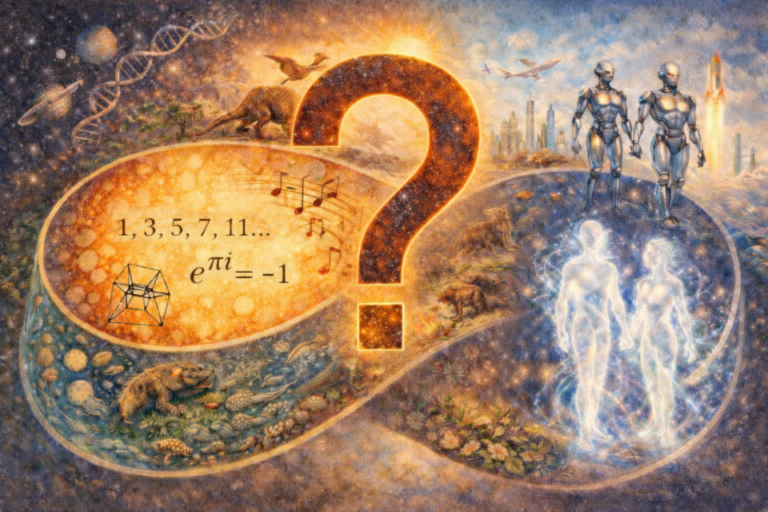
The complete xenobots history spans 13.8 billion years:
Cosmic Origins (13.8 billion years ago)
Begin with Big Bang nucleosynthesis producing hydrogen and helium. The carbon, nitrogen, oxygen, phosphorus, and sulfur needed for life came later, forged in stellar cores through fusion (pure thermodynamics, no purpose, no Platonic forms). Stars are dissipative structures maintaining themselves by degrading gravitational potential energy. When massive stars explode as supernovae, they scatter these heavier elements into space.
Planetary Conditions (4.5 billion years ago)
Earth’s position relative to the Sun established temperature and pressure gradients keeping water liquid, the solvent that enables chemical complexity. This isn’t cosmic accident; it’s thermodynamic consequence of orbital parameters and atmospheric composition. Far-from-equilibrium conditions in hydrothermal vents, tidal pools, and volcanic springs enabled organic molecules to form autocatalytic sets (reaction networks where products catalyze earlier reactions, creating chemical closure).
Evolutionary Constraint-Shaping (3.8 billion years to 300 million years ago)
Here’s where understanding xenobots self-replication becomes critical. Natural selection didn’t encode specific solutions to specific environments. If it had, xenobots would be impossible. The frog genome evolved under selection pressures for aquatic life (predator avoidance, foraging, reproduction). There was never selection for “being a good xenobot” because xenobots never existed until 2020.
Yet the cells know how to do it anyway. The only explanation that doesn’t require magic: evolution encodes constraint-satisfaction algorithms, not blueprints. The genome specifies molecular machinery (cilia for motility, cadherins for adhesion, gap junctions for bioelectric signaling, mitochondria for ATP production) that responds to local conditions by minimizing free energy.
What Actually Pays the Computational Cost: A Thermodynamic Accounting
Levin asks: “When was the computational cost paid to design xenobots?”
The answer is continuously, over 3.8 billion years, in adenosine triphosphate.
The Evolutionary Ledger
3.8 billion years ago: First cells paid computational costs exploring chemistry space. Autocatalytic networks that satisfied closure constraints persisted. Others dissolved. The “cost” was thermodynamic: configurations that couldn’t maintain boundaries against entropy didn’t survive to be observed.
2.5 billion years ago: Eukaryotes paid costs developing organelles, cytoskeletons, and sophisticated signaling. Mitochondria—formerly independent organisms—became ATP factories. Every cell division since has been copying this paid-for machinery.
500 million years ago: Vertebrates paid costs developing Hox genes, Wnt signaling, BMP gradients—the developmental toolkit. These are constraint propagation mechanisms, not blueprints. They respond to local conditions by minimizing free energy.
300 million years ago: Amphibians paid costs developing the specific molecular machinery xenobots deploy:
- Cilia proteins for motility (cost: ATP synthesis for dynein motors)
- Cadherins for adhesion (cost: protein folding and membrane insertion)
- Gap junctions for bioelectric coupling (cost: connexin synthesis and channel maintenance)
- Mitochondrial networks for energy production (cost: continuous glucose oxidation)
2020: Levin’s team didn’t pay new costs. They liberated already-paid-for machinery from normal developmental constraints.
When xenobots form, they’re spending currency earned over evolutionary time:
Hours 0-12: Cells burn ATP exploring adhesion space. Differential adhesion drives aggregation (Steinberg’s Differential Adhesion Hypothesis, 1963). Cost paid: ~10⁷ ATP molecules per cell per minute.
Hours 12-24: Gap junctions form, creating bioelectric networks. Voltage gradients coordinate ciliary beating. Cost paid: Ion pump maintenance, ~10⁶ ions/second/cell.
Hours 24-48: Stable configuration emerges. Not because a Platonic form “guided” it, but because this configuration satisfies multiple constraints simultaneously while remaining thermodynamically viable.
The Ongoing Cost
Xenobots live 10-14 days without nutrients, then die. Why? Because they run out of ATP. Maintenance costs exceed internal reserves. Boundaries degrade. Distinctions collapse. The xenobot dissolves into constituent cells, then into molecular soup.
This is Landauer’s Principle in action: maintaining any distinction—inside/outside, self/not-self, this-configuration/that-configuration—requires continuous energy expenditure of minimum kT ln(2) per bit erased.
What Platonism Contributes: Zero
Where in this accounting do we need Platonic forms?
- ATP synthesis? Pure chemistry.
- Protein folding? Thermodynamic minimization.
- Cell adhesion? Van der Waals forces and hydrophobic effects.
- Ciliary coordination? Bioelectric coupling and mechanochemical feedback.
- Configuration stability? Free energy minimization under constraints.
Every cost is paid in joules. Every step obeys thermodynamics. Every “computation” is physical work with measurable energy expenditure.
The “free lunch” is an illusion created by ignoring the 3.8 billion year payment history. Evolution paid. In ATP. Continuously. We just inherited the machinery.
The 48-Hour Xenobot Timeline (2020-present)
When Levin’s team liberated frog skin cells from normal developmental constraints, those cells explored the configuration space permitted by their molecular machinery. Within 48 hours, they self-organized into xenobots because this configuration satisfies multiple constraints simultaneously:
Mechanical constraint: Cells minimize surface energy through differential adhesion. Aggregates adopt configurations minimizing interfacial free energy.
Metabolic constraint: ATP-dependent maintenance requires configurations maximizing nutrient access and waste removal. Xenobots die within 10-14 days without nutrient replenishment (pure thermodynamics).
Bioelectric constraint: Gap junctions create electrical coupling coordinating ciliary beating for locomotion. This is Karl Friston’s Free Energy Principle at the multicellular level: minimize prediction error through action.
Organizational closure: The configuration must self-maintain. Maturana and Varela called this autopoiesis: systems producing the components that maintain the organization producing those components.
Are Xenobots Scientifically Accurate? Testing the Competing Frameworks
Here’s where we separate xenobots science from xenobots mysticism. Watch how these frameworks differ under empirical testing.
The Platonic Prediction: Unfalsifiable
If mathematical forms pre-exist in some morphospace and evolution gives organisms the ability to “index into” them, then any outcome can be accommodated. Xenobots formed? They indexed successfully. Xenobots failed to form? That form wasn’t accessible. Novel phenotypes emerge? The form was always there. This is not science; it’s narrative decoration that explains everything and therefore nothing.
The Thermodynamic Prediction: Falsifiable
The constraint-satisfaction framework makes testable predictions:
- Cell density effects: Alter density, different aggregate sizes and behaviors. Confirmed.
- Cilia requirement: Remove cilia, non-motile aggregates. Confirmed: Kriegman et al. (2020) explicitly describe how “Cilia, which produce locomotion through metachronal waves…were suppressed in vivo through embryonic microinjection of mRNA.”
- Gap junction dependency: Block gap junctions, disrupted coordination. Confirmed pharmacologically.
- Metabolic bounds: Restrict ATP, degraded behavior and death. Confirmed: 10-14 day lifespan without nutrients.
- Landauer’s bound: All computation must respect Rolf Landauer’s thermodynamic limit: erasing one bit requires dissipating minimum kT ln(2) energy as heat. Xenobots cannot violate this. If they could, physics itself would be falsified.
Every prediction flows from thermodynamic constraint-satisfaction. None require Platonic forms. None become more explicable by invoking transcendent mathematics.
Framework Comparison: What Each Predicts
| Question | Platonic Forms Predict | Thermodynamics Predicts | Observation |
|---|---|---|---|
| Remove cilia? | Form might still manifest | No motility, aggregates only | No motility confirmed |
| Block gap junctions? | Form persists, maybe differently | Disrupted coordination | Disrupted coordination |
| Deprive nutrients? | Form might persist via “ingression” | Death within 2 weeks | Death at 10-14 days |
| Alter cell density? | Form adjusts or different form accessed | Different aggregate sizes | Different sizes confirmed |
| Heat to 60°C? | Form unaffected (it’s mathematical) | Protein denaturation, death | Death confirmed |
| Add tubulin inhibitors? | Unpredictable | Cytoskeleton collapse | Collapse confirmed |
Pattern: Thermodynamics makes differential predictions. Platonism accommodates any outcome. Only one is science.
Michael Levin Xenobots: Where the Science Ends and Philosophy Fails
Levin’s empirical work is first-rate. His conceptual framework is a disaster. He has confused mathematical description with ontological substrate. Because mathematics can describe the xenobot’s state space and governing constraints, he concludes mathematical forms must exist independently and exert causal influence.
This is like concluding that because differential equations describe planetary orbits, the equations must hover in Platonic heaven pushing planets around.
Mathematics is the language describing constraint relationships, a compression algorithm evolved through cultural selection that lets us predict system behavior without simulating every microstate. When we say F = ma, we’re not claiming this equation exists transcendently. We’re claiming that in every measurable interaction, momentum and force are related by this constraint. The equation is our map. The constraint is in the territory. But the constraint isn’t a separate “thing” existing independently of matter. It’s a regularity in how matter behaves.
The Placebo Effect, Xenobots, and Cross-Scale Mechanisms
In the video that sparked this analysis, philosopher John Vervaeke asks Levin about the placebo effect, a shrewd question that forces the same mechanistic question across biological scales. Levin describes unpublished work showing gene regulatory networks can be classically conditioned like Pavlov’s dog. Present a “neutral” drug with a “potent” drug repeatedly, and eventually the neutral drug alone triggers the same response.
This demonstrates Pavlovian conditioning isn’t unique to neural architecture but a generic feature of networked feedback systems. Associative learning occurs at the molecular level, no neurons required. This is genuinely interesting xenobots-related research.
But then Levin leaps to Albert Mason’s 1950s hypnodermatology work, where hypnotic suggestion cleared certain skin disorders. Mason famously used hypnosis to treat a teenage boy with severe congenital ichthyosis, achieving dramatic results (Mason, 1952, British Medical Journal).
“That somehow filters down into the molecular signals,” Levin says. “It’s crossing multiple levels.”
Yes, it crosses levels. So what? Water flows downhill across multiple levels too, but we don’t invoke Platonic forms. We describe the mechanism: gravitational potential converts to kinetic energy. At every scale, energy and momentum are conserved. At every scale, thermodynamics constrains possibility.
The mechanistic chain for placebo effects is well-established:
- Language modulates cortical activity
- Cortical activity modulates autonomic function via brainstem projections
- Autonomic signals alter blood flow, immune trafficking, hormone release
- Systemic changes alter local microenvironment
- Cells respond by modulating gene expression
- Altered gene expression produces tissue-level healing
Every step is mechanistic, falsifiable, and thermodynamically bounded. As anthropologist Daniel Moerman documents, placebo responses are biologically constrained: you cannot placebo away vitamin deficiency, reverse metastatic cancer, or regrow severed limbs. The effect operates by modulating existing regulatory systems, not creating effects ex nihilo.
No Platonic forms required for understanding xenobots, placebo effects, or any biological phenomenon. Just cells responding to environments that include signals from brains processing linguistic information.
Xenobots Criticism: Why Unfalsifiability Matters
Science advances by proposing explanations that could be wrong, then trying with maximum ingenuity to prove them wrong. Karl Popper called this falsificationism: while not perfect as complete philosophy of science, it remains our best heuristic for distinguishing explanation from storytelling.
An unfalsifiable claim isn’t deep truth. It’s failed explanation. Platonism fails catastrophically. No observation could falsify the claim that mathematical forms exist transcendently. This is explanatory impotence dressed in ancient prestige.
The thermodynamic framework makes differential predictions at every scale. Violate constraints, get different outcomes. This is testable, falsifiable, and scientific.
The Bottom Line: Xenobots Explained Without Magic
The xenobot’s history is the universe’s history: hydrogen to helium to carbon to chemistry to cells to coordination to emergence. No gods, no Platonic forms, no cosmic repository of possibilities. Just constraint propagation across scales, bounded at every level by thermodynamic law.
Are xenobots real? Yes.
How do xenobots work? Thermodynamic constraint-satisfaction using machinery paid for over 3.8 billion years.
When was the computational cost paid? Continuously, in ATP, since life began.
Is Michael Levin’s Platonic interpretation necessary? No. It adds zero explanatory power and makes zero differential predictions.
What does xenobots history actually teach us?
That evolution doesn’t encode blueprints; it encodes problem-solving machinery versatile enough to explore vast morphospace regions given the right conditions.
The “free gift” isn’t from mathematics. It’s from thermodynamics: far from equilibrium, under energy flow, with the right molecular toolkit, matter self-organizes. Not because forms beckon from beyond. Because that’s what matter does when it can.
The Pattern That Connects All Patterns
Gregory Bateson asked: “What is the pattern which connects all patterns?”
Not Platonic forms. Not élan vital. Not souls or homunculi or cosmic algorithms.
The pattern is constraint satisfaction under thermodynamic bounds.
Differences that persist are differences that pay their thermodynamic rent. Everything else dissolves into noise.
Levin has given us empirical demonstration of a principle that should reshape thinking about development, evolution, and biological possibility. That’s enough. That’s more than enough.
We don’t need Plato to make it profound. We need only thermodynamics, time, and the patience to trace mechanisms all the way down.
And when we do trace them down, we find: ATP, protein folding, voltage gradients, mechanical forces, and 13.8 billion years of the universe teaching matter how to organize itself.
No magic required. Just physics. All the way down.
References
Blackiston, D., Lederer, E., Kriegman, S., Garnier, S., Bongard, J., & Levin, M. (2021). A cellular platform for the development of synthetic living machines. Science Robotics, 6(52), eabf1571. https://doi.org/10.1126/scirobotics.abf1571
Friston, K. (2010). The free-energy principle: a unified brain theory? Nature Reviews Neuroscience, 11(2), 127-138. https://doi.org/10.1038/nrn2787
Kondepudi, D., Kay, B., & Dixon, J. (2017). Dissipative structures and irreversibility in nature. Chaos, 27(10), 104501. https://doi.org/10.1063/1.5008858
Kriegman, S., Blackiston, D., Levin, M., & Bongard, J. (2020). A scalable pipeline for designing reconfigurable organisms. Proceedings of the National Academy of Sciences, 117(4), 1853-1859. https://doi.org/10.1073/pnas.1910837117
Kriegman, S., Blackiston, D., Levin, M., & Bongard, J. (2021). Kinematic self-replication in reconfigurable organisms. Proceedings of the National Academy of Sciences, 118(49), e2112672118. https://doi.org/10.1073/pnas.2112672118
Landauer, R. (1961). Irreversibility and heat generation in the computing process. IBM Journal of Research and Development, 5(3), 183-191. https://doi.org/10.1147/rd.53.0183
Lewontin, R. C. (1991). Biology as Ideology: The Doctrine of DNA. New York: HarperCollins.
Mason, A. A. (1952). A case of congenital ichthyosiform erythrodermia of Brocq treated by hypnosis. British Medical Journal, 2(4781), 422-423. https://doi.org/10.1136/bmj.2.4781.422
Maturana, H. R., & Varela, F. J. (1980). Autopoiesis and Cognition: The Realization of the Living. Dordrecht: D. Reidel.
Moerman, D. E. (2002). Meaning, Medicine, and the ‘Placebo Effect’. Cambridge: Cambridge University Press.
Nobel Prize Press Release (1977). The Nobel Prize in Chemistry 1977. Nobel Foundation. https://www.nobelprize.org/prizes/chemistry/1977/press-release/
Nobel Prize Ceremony Speech (1977). Award ceremony speech: The 1977 Nobel Prize in Chemistry. Nobel Foundation. https://www.nobelprize.org/prizes/chemistry/1977/ceremony-speech/
Popper, K. R. (1963). Conjectures and Refutations: The Growth of Scientific Knowledge. London: Routledge.
Prigogine, I. (1977). Time, Structure and Fluctuations. Nobel Lecture, December 8, 1977. Nobel Foundation. https://www.nobelprize.org/uploads/2018/06/prigogine-lecture.pdf
Steinberg, M. S. (1963). Reconstruction of tissues by dissociated cells. Science, 141(3579), 401-408. https://doi.org/10.1126/science.141.3579.401