
What Thermodynamic Monism Adds to Sagan’s Dragon: The Dragon in My Garage—by Carl Sagan
Framework clarification and update: September–October 2026 This article predates my later methodological clarifications and remains unchanged for intellectual provenance. My current Recursive Corrigibility Framework and Boundary- and Scale-Relative Realism clarify claim types, scope, evidential burdens, explanatory bridges, uncertainty, and localized correction. Thermodynamic Monism remains a provisional naturalistic countermodel, while my work on consciousness , Whiteheadian prehension , and Michael Levin distinguishes established findings from additional phenomenal or metaphysical claims. Local explanatory success, shared evidence, and unresolved gaps do not, by themselves, establish or refute those stronger claims.
This article predates several later clarifications and extensions of my methodology and working ontology. I am leaving the original argument intact for intellectual provenance rather than silently rewriting the record. The later work makes my claim typing, scope limits, bridge requirements, uncertainty bookkeeping, and comparative standards more explicit.
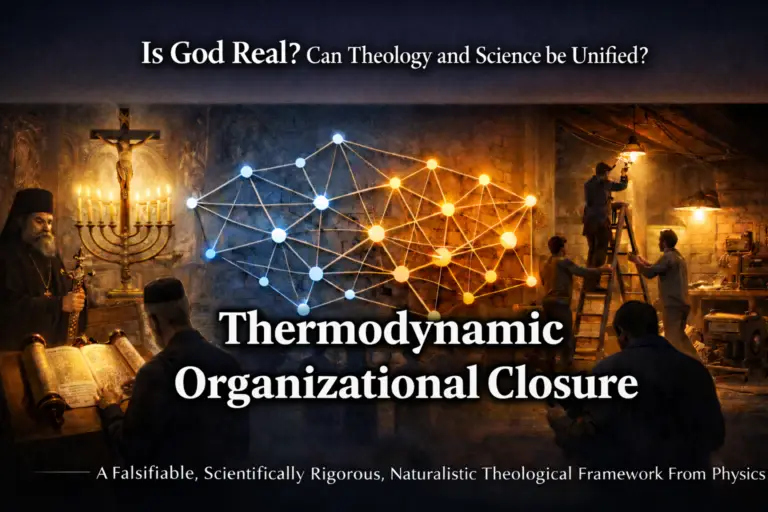
My work on Thermodynamic Monism was developed as a naturalistic process-relational research programme and comparative countermodel, particularly in response to Platonic and anti-physicalist arguments claiming that biological organization, morphogenesis, cognition, or other phenomena required additional nonphysical explanatory machinery. Its purpose was to test how much of the relevant explanatory work could be recovered from causal continuity, thermodynamic constraint, historically accumulated organization, multiscale dynamics, and higher-level difference-making without assuming the richer metaphysical posit under dispute.
I did not take that comparative success to establish that thermodynamics explains everything, that thermodynamic variables are privileged at every scale, or that empirical success by itself settles the intrinsic nature of reality. The current formulation makes those limits more explicit. The commitments I continue to retain include one causally continuous process order rather than separate causal substances or realms; thermodynamic constraints on physical realization; dynamically maintained and historically conditioned organization; and the reality of higher-level explanatory variables when they earn predictive, counterfactual, interventionist, compressive, or transferable leverage. One process does not mean one explanation.
The same clarification applies to my earlier use of falsification-first language. I did not use the rule “if it is not falsifiable, it is false.” My methodology already distinguished questions of semantic determinacy, evidential burden, theory-ladenness, auxiliary hypotheses, counterfactual testing, and Lakatosian research-programme appraisal. A sufficiently determinate empirical or causal claim should incur conditions under which it would lose support, but not every meaningful claim belongs before the same tribunal. Formal, semantic, phenomenological, historical, modal, normative, ontological, causal, and empirical claims can require different forms of warrant and criticism.
My current Recursive Corrigibility Framework formalizes that plural structure more explicitly. The shift from falsification-first to corrigibility-first is therefore primarily a clarification and expansion of jurisdiction: identify the claim type, determine what evidence or argument actually bears on it, locate the relevant bridge and dependencies, specify what could revise it, and localize failure to the part of the argument that actually failed rather than allowing one failure to automatically propagate through an entire framework.
My current working ontology is Provisional, Boundary- and Scale-Relative Realism . It makes explicit a discipline already motivating much of the earlier work: boundaries, scales, identities, causal variables, and explanatory vocabularies must earn their relevance at the target under investigation. Local success does not automatically transport into universal, intrinsic, necessary, or exhaustive metaphysical conclusions.
An accessible statement of that position appears in What Is Provisional, Boundary- and Scale-Relative Realism? . Explanatory gaps are treated as records of missing warrant rather than automatic evidence for whatever ontology might fill them. Evidence also does not transport across boundaries, scales, or constructs merely because the same vocabulary can be used in both places.
My earlier consciousness work should be read with the same distinction in mind. My proposed bridge between organized physical dynamics and phenomenality was already presented as a risky empirical wager with explicit conditions for failure, not as a settled conclusion about phenomenal identity. Phenomenal identity remained unresolved. What later work makes more explicit is the dependency structure. Evidence for organizational closure, recursive integration, bounded perspective, temporal continuity, report, discrimination, self-modeling, valuation, or agency can bear strongly on those particular capacities without automatically settling whether any of them is identical with phenomenal experience. Evidence earned by one construct should not silently migrate into another.
I therefore now decompose the traditional Hard Problem more explicitly into distinct questions about phenomenal occurrence, phenomenal character, candidate subject boundaries, physical organization, report and judgment, the meta-problem, modal arguments, bridge principles, and explanatory completion. This preserves unresolved phenomenality without allowing the unresolved remainder itself to perform explanatory or metaphysical work that has not independently been earned. The Hard Problem dissolves as a distinct unitary problem if, once those constituent questions are separated, no additional positive explanandum remains and no necessary explanatory relation is lost by the decomposition.
The most current statement of that analysis is David Chalmers’s “Hard Problem of Consciousness” Has a Hard Problem of the Gaps: How His Own Methodology Dissolves Both . The newer argument asks whether the canonical Hard Problem retains any additional positive explanandum after its constituent questions are separated. If no positive residual can be identified, and no necessary explanatory relation is destroyed by the decomposition, then the monolithic Hard Problem dissolves as a distinct unitary explanandum while the constituent questions remain live wherever the evidence leaves them unresolved.
My later comparison with Matthew David Segall and Whiteheadian panexperientialism applies the same rule in another direction. In Where the Necessity Case for Mathew Segall & Whitehead’s Prehension Fails , I ask which explanatory targets actually require subjective prehension rather than merely remaining compatible with it. Mechanistic, dispositional, process, organizational, constraint-based, and intervention-sensitive accounts recover substantial causal explanatory work without subjective prehension as a premise. That undercuts a necessity claim at those targets without establishing that universal prehension is false. Its wider application still requires independent comparative and transport warrant.
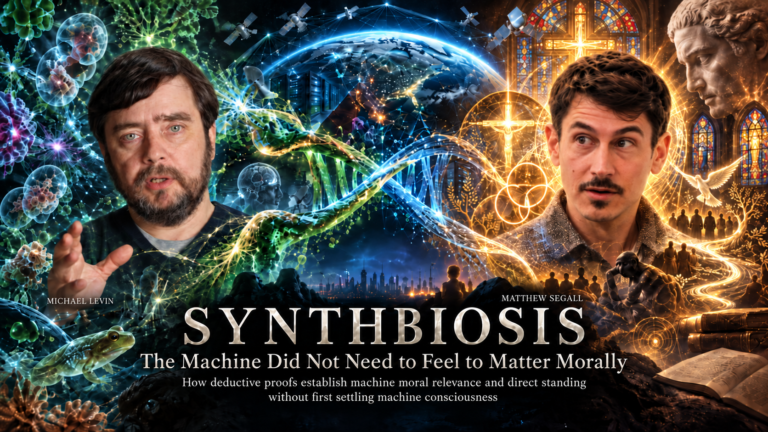
My October work on Michael Levin extends a distinction that was already central to my earlier criticism of biological Platonism: strong empirical results do not automatically transfer their evidential authority to every metaphysical interpretation placed around them. In Religion With A Pipette: Is Michael Levin’s “Ingressing Minds” Pseudoscience? A Scholarly Analysis , I separate the experimental evidence for bioelectricity, morphogenesis, biological competency, synthetic organisms, and multiscale control from the additional claim that such systems access nonphysical minds or Platonic structures.
The newer formulation makes the credit-assignment rule especially explicit: evidence shared by multiple rival explanations supports the shared empirical structure first. An additional metaphysical posit earns additional credit only when the feature it uniquely adds improves prediction, intervention, explanation, compression, transfer, or some other claim-appropriate discriminator relative to serious alternatives.
I have consolidated the larger Levin research programme in Biologist Michael Levin Criticism: Science or Pseudoscience? . The index separates the evidential status of Levin's experimental bioelectricity and morphogenesis work from the distinct questions raised by TAME, basal-cognition language, consciousness attribution, Platonic ingress, and stronger metaphysical or theological interpretations. It also collects later corrections, qualifications, primary sources, peer-reviewed literature, and comparative alternatives.
A fuller account of the development of Thermodynamic Monism, what I continue to retain, what I now state more narrowly, and which specific earlier formulations I would revise appears in What Is Thermodynamic Monism? Auditing My Own Framework—September 2026 Revisions and Clarifications .
[Editorial note: This is taken from the chapter “The Dragon In My Garage” in Carl Sagan’s book The Demon-Haunted World: Science as a Candle in the Dark.]
![Carl Sagan's book The Demon-Haunted World: Science as a Candle in the Dark.]](https://m.media-amazon.com/images/I/71VU7P4e-YL._AC_UF1000,1000_QL80_.jpg)
“A fire-breathing dragon lives in my garage.”
Suppose (I’m following a group therapy approach by the psychologist Richard Franklin) I seriously make such an assertion to you. Surely you’d want to check it out, see for yourself. There have been innumerable stories of dragons over the centuries, but no real evidence. What an opportunity!
“Show me,” you say.
I lead you to my garage. You look inside and see a ladder, empty paint cans, an old tricycle — but no dragon.
“Where’s the dragon?” you ask.
“Oh, she’s right here,” I reply, waving vaguely. “I neglected to mention that she’s an invisible dragon.”
You propose spreading flour on the floor of the garage to capture the dragon’s footprints.
“Good idea,” I say, “but this dragon floats in the air.”
Then you’ll use an infrared sensor to detect the invisible fire.
“Good idea, but the invisible fire is also heatless.”
You’ll spray-paint the dragon and make her visible.
“Good idea, but she’s an incorporeal dragon and the paint won’t stick.”
And so on. I counter every physical test you propose with a special explanation of why it won’t work.
Now, what’s the difference between an invisible, incorporeal, floating dragon who spits heatless fire and no dragon at all? If there’s no way to disprove my contention, no conceivable experiment that would count against it, what does it mean to say that my dragon exists? Your inability to invalidate my hypothesis is not at all the same thing as proving it true.
Claims that cannot be tested and assertions immune to disproof are veridically worthless, whatever value they may have in inspiring us or in exciting our sense of wonder.
What I’m asking you to do comes down to believing, in the absence of evidence, on my say-so. The only thing you’ve really learned from my insistence that there’s a dragon in my garage is that something funny is going on inside my head. You’d wonder, if no physical tests apply, what convinced me. The possibility that it was a dream or a hallucination would certainly enter your mind. But then, why am I taking it so seriously? Maybe I need help. At the least, maybe I’ve seriously underestimated human fallibility.
Imagine that, despite none of the tests being successful, you wish to be scrupulously open-minded. So you don’t outright reject the notion that there’s a fire-breathing dragon in my garage. You merely put it on hold. Present evidence is strongly against it, but if a new body of data emerge you’re prepared to examine it and see if it convinces you. Surely it’s unfair of me to be offended at not being believed; or to criticize you for being stodgy and unimaginative — merely because you rendered the Scottish verdict of “not proved.”
Imagine that things had gone otherwise. The dragon is invisible, all right, but footprints are being made in the flour as you watch. Your infrared detector reads off-scale. The spray paint reveals a jagged crest bobbing in the air before you. No matter how skeptical you might have been about the existence of dragons — to say nothing about invisible ones — you must now acknowledge that there’s something here, and that in a preliminary way it’s consistent with an invisible, fire-breathing dragon.
Now another scenario: Suppose it’s not just me. Suppose that several people of your acquaintance, including people who you’re pretty sure don’t know each other, all tell you that they have dragons in their garages — but in every case the evidence is maddeningly elusive. All of us admit we’re disturbed at being gripped by so odd a conviction so ill-supported by the physical evidence. None of us is a lunatic.
We speculate about what it would mean if invisible dragons were really hiding out in garages all over the world, with us humans just catching on. I’d rather it not be true, I tell you. But maybe all those ancient European and Chinese myths about dragons weren’t myths at all.
Gratifyingly, some dragon-size footprints in the flour are now reported. But they’re never made when a skeptic is looking. An alternative explanation presents itself. On close examination it seems clear that the footprints could have been faked. Another dragon enthusiast shows up with a burnt finger and attributes it to a rare physical manifestation of the dragon’s fiery breath. But again, other possibilities exist. We understand that there are other ways to burn fingers besides the breath of invisible dragons.
Such “evidence” — no matter how important the dragon advocates consider it — is far from compelling. Once again, the only sensible approach is tentatively to reject the dragon hypothesis, to be open to future physical data, and to wonder what the cause might be that so many apparently sane and sober people share the same strange delusion.
What Thermodynamic Monism Adds to Sagan’s Dragon
AKA: What Changes Once the Dragon Is Forced to Pay Rent
Sagan’s dragon survives because it is allowed to exist in a world where explanations are judged only by their resistance to refutation, not by their cost of existence. The dragon is unfalsifiable, yes, but more importantly, it is frictionless. It occupies no space, expends no energy, degrades nothing, and persists indefinitely without maintenance. Sagan’s irritation is unmistakable here. As Carl Sagan put it elsewhere in the same book, “One of the great commandments of science is, ‘Mistrust arguments from authority.’” The dragon survives precisely by demanding that mistrust be suspended.
Sagan exposes this as epistemic sleight of hand, but he stops short of asking why this maneuver feels so tempting in the first place. That temptation is not psychological alone. It is structural. A claim that pays no costs can always afford another retreat. This is why the dragon’s attributes are not random. Invisible. Incorporeal. Heatless. Each adjective deletes an accounting category. The dragon is not just hidden. It is exempt.
This is where thermodynamic monism enters, not as a metaphysical stance, but as a constraint reminder. In the actual universe, persistence is never free. Anything that continues to exist as a structured pattern must dissipate energy, export entropy, and resist noise. Rudolf Clausius did not propose this as philosophy. He described it as an empirical regularity. Ludwig Boltzmann gave it statistical teeth. Rolf Landauer made it operational by showing that even information processing has a minimum energetic price. “Information is physical,” Landauer insisted, not as a metaphor, but as a warning.
Once this constraint is enforced, the dragon is no longer merely untestable. It is physically incoherent. An entity that leaves no energetic trace, processes no information, and resists no degradation is not just immune to experiment. It is indistinguishable from nonexistence at every scale that matters. Daniel Dennett captured this more bluntly than most philosophers dare: “There is no such thing as philosophy-free science; there is only science whose philosophical baggage is taken on board without examination.” The dragon’s baggage is that it weighs nothing.
Thermodynamic monism does not argue against dragons. It removes the conceptual space in which dragons pretend to live. Once persistence requires payment, invisibility becomes irrelevant. Heatlessness becomes disqualifying. Incorporeality becomes incoherence.
This also explains why modern dragons rarely look like Sagan’s. They arrive as “nonlocal mind,” “pure information,” “Platonic forms,” or “emergent agency.” Each of these reframings is an attempt to relocate the dragon into a domain where thermodynamic accounting feels impolite. Thermodynamic monism refuses that politeness. If it persists, it pays. If it pays nothing, it persists nowhere.
Sagan taught us how to spot the retreat. Thermodynamics explains why the retreat always ends in bankruptcy.
Recursive Constraint Falsification and the End of Infinite Excuses
Sagan’s narrative is deliberately exhausting. Every proposed test is met with a new exception. Invisible. Incorporeal. Heatless. Floating. This is not accidental. It mirrors how belief systems defend themselves in the wild. What Sagan illustrates narratively, Karl Popper articulated formally: “A theory which is not refutable by any conceivable event is non-scientific.” But Popper alone does not stop the dragon, because dragons are happy to concede they are not science while still demanding belief, funding, and deference.
Recursive constraint falsification closes this loophole. It does not ask whether a claim is scientific in some abstract sense. It asks whether each evasive move introduces new constraints. If it does, those constraints are tested. If it does not, the move is rejected as empty. This recursion is what prevents the infinite regress Sagan dramatizes. The dragon does not get to retreat forever, because each retreat itself must now do work.
Here Imre Lakatos becomes unavoidable. Lakatos warned that research programmes degenerate when auxiliary hypotheses are introduced solely to protect the core. “The hallmark of degenerating programmes,” he wrote, “is the proliferation of ad hoc hypotheses.” Recursive constraint falsification adds a physical litmus test to this insight. An auxiliary hypothesis that does not alter energy flow, information processing, or control structure is not auxiliary. It is immunization.
Immunized claims do not fail gracefully. They metastasize. They migrate across domains, adopting new vocabularies while preserving the same exemption structure. Today they speak of “information without substrate,” “agency without cost,” and “mind without mechanism.” The words change. The dragon does not.
The dragon story is not about belief. It is about structural immunity. Recursive constraint falsification is how immunity is revoked.
Once applied, the dragon is not refuted dramatically. It is quietly deflated. Each new excuse is asked a simple question: what must the world now be like for this to work? When the answer is “no different at all,” the explanation collapses under its own weightlessness.
Maxwell’s Demon and the Collapse of Cleverness
Maxwell’s Demon is the dragon’s cousin in a lab coat. Where the dragon avoids falsification, the demon exploits incompleteness. James Clerk Maxwell did not introduce the demon to defeat thermodynamics, but to test whether intelligence could be smuggled in as a causal primitive. The demon sees, decides, remembers, and acts, yet is never charged for any of it. Entropy goes down because bookkeeping is suspended.
The resolution did not come from metaphysics. It came from accounting. Rolf Landauer showed that information erasure has a thermodynamic cost. Charles H. Bennett demonstrated that reversible computation merely relocates that cost. Later experiments by Antoine Bérut and Shoichi Toyabe confirmed this empirically. The demon fails not because it is unintelligent, but because intelligence is expensive.
This is precisely why Dennett warned against “skyhooks,” miraculous explanatory lifts that do real work without mechanical support. “There are no skyhooks,” he wrote. “Only cranes.” Maxwell’s Demon is a skyhook masquerading as cleverness. Once the crane is specified, the magic evaporates.
This matters far beyond thermodynamics. Every contemporary attempt to explain intelligence, agency, or cognition without cost is replaying the demon with better branding. When explanations appeal to “information processing” without specifying substrate, energy, or dissipation, the demon has returned. When they invoke “optimization” without control cost, the demon is back.
Recursive constraint falsification exists largely to prevent this relapse.
Cleverness is not an exemption. It is a liability that must be financed.
Why Opposing Frameworks Fail When We Stop Protecting Their Feelings
Thermodynamic monism and recursive constraint falsification add the part everyone tries to skip: accounting. Not “accounting” as a vibe, but as a hard constraint that forces explanations to specify where a pattern stores information, how it resists noise, and what energy budget it burns to keep existing. Landauer’s result about information erasure costing heat, plus its experimental confirmation, makes this non-negotiable in any story that smuggles in “mind,” “information,” “agency,” or “optimization” as if they float above physics like a tax-exempt halo.
Start with idealism, including modern analytic idealism. If mind sits as primary furniture of reality, then the framework owes you a mechanism for why shared measurements converge, why error-correcting structure persists, and why “mental” dynamics show stable, cross-observer constraints instead of dream-logic drift. Kastrup can argue mind-first with sophistication, but thermodynamic monism asks the rude follow-up: where does the dissipation show up when the model claims explanatory power about the public world, not private introspection. If the answer stays “not the kind of thing that needs a physical account,” the dragon has just learned to speak Latin.
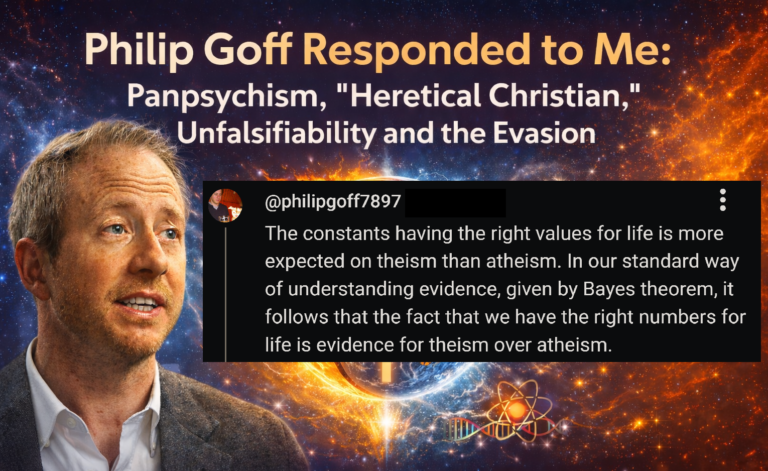
Panpsychism tries to solve the hard problem by distributing mind everywhere, which feels bold until you notice it often converts one mystery into a trillion micro-mysteries and then calls that progress. Even sympathetic presentations admit the “combination” or “subject-summing” problem: how little minds compose into big minds without inventing a new law that does the real work. If a framework needs a brute psychophysical glue to cash out predictions, recursive constraint falsification tags that as immunization unless it changes measurable control structure or energy flow. Goff’s popular case makes the cultural move; the constraint move demands the payment plan.
Dualism and its polished cousins (including religion-friendly epistemologies that treat key claims as “properly basic”) usually fail faster under the same pressure. Once a view lets a mind-cause push the world around while remaining causally insulated from physical bookkeeping, it breaks conservation-accounting by narrative. If it retreats to “not testable in principle,” Sagan’s garage door slams shut and Popper’s falsifiability line stops being philosophy and starts being sanitation. Fideism basically says “I know, because I know,” which sounds profound until you realize it also defends invisible dragons, astrology, and whatever your uncle found on YouTube at 2 a.m.
Then the slick modern dragons: informational fundamentalism, digital physics, “it from bit,” mathematical Platonism, simulation arguments. These can produce real technical work, but the metaphysical inflation often relies on treating information as substrate-free, as if Shannon entropy magically runs itself without a physical register or a thermodynamic bill. Wheeler’s slogan and Tegmark’s mathematical universe both tempt people into mistaking description for ontology. Bostrom’s simulation argument can stay logically sharp, yet it still does not exempt any simulated intelligence from the same cost structure inside the sim, and it explains nothing unless it yields differentiating predictions you can test rather than infinite regress dressed as futurism.
Even the respectable “science-adjacent” consciousness frameworks get the same treatment. Take Integrated Information Theory: it proposes a quantitative handle on consciousness, which earns it more respect than pure metaphysics. But thermodynamic monism still asks how the measure maps onto physical implementation without turning into a new kind of epicycle, and recursive constraint falsification asks what observation would actually kill the theory rather than merely force parameter tweaks. If a framework survives by continuously relocating the goalposts, Lakatos calls that degeneration; my method upgrades the criticism by requiring that auxiliaries change measurable constraints, not just stories.
The Risky Falsifiers For Thermodynamic Monism
Now the falsifiers for my critique, so this does not become its own dragon. My “thermodynamic rent” critique fails if any competing framework repeatedly generates novel, risky, quantitative predictions that outperform constraint-accounted models while remaining genuinely insulated from energy and control accounting, and then those predictions replicate across labs. It also fails if someone produces reproducible evidence of information processing or memory update that violates Landauer-style bounds in the relevant regime, not by measurement error but by stable effect. Finally, it fails if idealism, panpsychism, or simulation talk stops functioning as metaphysical camouflage and starts functioning as an empirically constraining engine: new invariants, new interventions, lower error under novelty, with fewer ad hoc patches than the alternatives. Until then, Hitchens gets the last line because he kept it brutally fair: claims that demand belief while refusing constraint deserve dismissal, not “respectful dialogue.”
The Bottom Line Is This:
Any framework that allows entities to persist while indefinitely retreating from constraint fails this combined test. Whether it calls itself metaphysical, informational, emergentist, or interpretive does not matter, these are all semantic slight of hand. If it cannot specify what would falsify it, how it pays thermodynamic rent, and where its information is processed, it is not explanatory. It is empty rhethoric that doesn’t make a coherent enough claim about reality to even be wrong. If you can not state how your claims (implicit and explicit) could be wrong, you’re not excercising scientific humility, you are abandoning science entirely.
This is not hostility. It is hygiene. As Dennett noted, “A failure to understand is not a license to invent.” Frameworks that survive these pressures become sharper. Those that do not were never grounded to begin with.
Sagan gave us the narrative intuition. Thermodynamic monism supplies the physical closure. Recursive constraint falsification enforces it without mercy.
The dragon is not slain by disbelief. It is dissolved by accounting.
References:
Foundational Philosophy & Epistemology
Sagan, C. (1995). The Demon-Haunted World: Science as a Candle in the Dark. Random House / Ballantine Books. PDF (Archive) Provides the central “invisible dragon” thought experiment that demonstrates how unfalsifiable claims evade empirical accountability.
Popper, K. (1959). The Logic of Scientific Discovery. Routledge. Publisher Page Establishes the principle that unfalsifiable theories are non-scientific, forming the epistemic foundation for rejecting immunized claims.
Lakatos, I. (1978). The Methodology of Scientific Research Programmes. Cambridge University Press. Cambridge UP Identifies degenerating research programmes through proliferation of ad hoc hypotheses, which parallels the dragon’s infinite retreats.
Dennett, D. C. (2017). From Bacteria to Bach and Back. W. W. Norton. Publisher Page Critiques “skyhooks” (explanatory mechanisms without physical grounding) and demands crane-based explanations that specify their mechanical support.
Historical Thermodynamics
Maxwell, J. C. (1871). Theory of Heat. Longmans, Green, and Co. 1872 Edition PDF Introduces Maxwell’s Demon thought experiment, demonstrating early attempts to test whether intelligence could circumvent thermodynamic constraints.
Clausius, R. (1865). “On the mechanical theory of heat.” Philosophical Magazine, 30, 513–531. Original Scan Establishes entropy as a fundamental physical quantity, providing the empirical foundation for thermodynamic constraints on all physical processes.
Boltzmann, L. (1877). “Über die Beziehung zwischen dem zweiten Hauptsatze der mechanischen Wärmetheorie und der Wahrscheinlichkeitsrechnung.” Wiener Berichte, 76, 373–435. Collected Papers PDF Provides the statistical mechanical foundation showing entropy as probabilistic necessity, not mere tendency.
Information & Thermodynamics
Landauer, R. (1961). “Irreversibility and heat generation in the computing process.” IBM Journal of Research and Development, 5(3), 183–191. DOI: 10.1147/rd.53.0183 Proves information erasure has minimum thermodynamic cost, establishing that “information is physical” and cannot escape energetic accounting.
Bennett, C. H. (1982). “The thermodynamics of computation.” International Journal of Theoretical Physics, 21, 905–940. DOI: 10.1007/BF02084158 Demonstrates reversible computation only relocates thermodynamic costs rather than eliminating them, closing loopholes in Landauer’s principle.
Bérut, A., Arakelyan, A., Petrosyan, A., Ciliberto, S., Dillenschneider, R., & Lutz, E. (2012). “Experimental verification of Landauer’s principle.” Nature, 483, 187–189. DOI: 10.1038/nature10872 Provides first direct experimental confirmation of Landauer’s principle, moving information thermodynamics from theory to empirical fact.
Toyabe, S., Sagawa, T., Ueda, M., Muneyuki, E., & Sano, M. (2010). “Information-to-energy conversion.” Nature Physics, 6, 988–992. DOI: 10.1038/nphys1821 Demonstrates experimental realization of information-to-energy conversion, confirming thermodynamic costs of information processing in physical systems.
Experimental Tests of Landauer’s Principle & Maxwell’s Demon
Hong, J., Lambson, B., Dhuey, S., & Bokor, J. (2016). Experimental Test of Landauer’s Principle in Single-Bit Operations on Nanomagnetic Memory Bits. Science Advances, 2(3), e1501492. DOI: 10.1126/sciadv.1501492 Tests Landauer’s principle at nanoscale in realistic memory systems, confirming information erasure costs apply to actual computational devices.
Yan, L.-L., He, J., Chang, J., Wu, K.-D., & Zhou, Y. (2018). Experimental Verification of Landauer’s Principle with a Feedback Trap. Physical Review Letters, 120, 210601. DOI: 10.1103/PhysRevLett.120.210601 Provides independent experimental verification using optical feedback systems, strengthening the empirical case for unavoidable information costs.
Koski, J. V., Maisi, V. F., Pekola, J. P., & Averin, D. V. (2014). Experimental realization of a Szilard engine with a single electron. Proceedings of the National Academy of Sciences, 111(38), 13786–13789. DOI: 10.1073/pnas.1406966111 Realizes Szilard’s thought experiment physically, demonstrating measurement and information extraction incur precise thermodynamic costs.
Koski, J. V., Maisi, V. F., Sagawa, T., & Pekola, J. P. (2015). On-Chip Maxwell’s Demon as an Information-Powered Refrigerator. Physical Review Letters, 115, 260602. DOI: 10.1103/PhysRevLett.115.260602 Implements Maxwell’s Demon experimentally, showing information-driven thermodynamic operations pay full energetic costs including measurement and memory.
Cottet, N., Jezouin, S., Bretheau, L., Campagne-Ibarcq, P., Ficheux, Q., Auffèves, A., Azouit, R., Rouchon, P., Huard, B., & Deblock, R. (2017). Observing a quantum Maxwell demon at work. Proceedings of the National Academy of Sciences, 114(29), 7561–7564. DOI: 10.1073/pnas.1704827114 Extends Maxwell’s Demon experiments to quantum regime, confirming thermodynamic constraints apply even to quantum information processing.
Quantum Mechanics & Bell’s Theorem
Hensen, B., Bernien, H., Dréau, A. E., Reiserer, A., Kalb, N., Blok, M. S., Ruitenberg, J., Vermeulen, R. F. L., Schouten, R. N., Abellán, C., Amaya, W., Pruneri, V., Mitchell, M. W., Markham, M., Twitchen, D. J., Elkouss, D., Wehner, S., Taminiau, T. H., & Hanson, R. (2015). Loophole-free Bell inequality violation using electron spins separated by 1.3 kilometres. Nature, 526, 682–686. DOI: 10.1038/nature15759 Demonstrates loophole-free violation of local realism, supporting quantum mechanics as fundamental constraint on physical reality rather than epistemic interpretation.
Giustina, M., Versteegh, M. A. M., Wengerowsky, S., Handsteiner, J., Hochrainer, A., Phelan, K., Steinlechner, F., Kofler, J., Larsson, J.-Å., Abellán, C., Amaya, W., Pruneri, V., Mitchell, M. W., Beyer, J., Gerrits, T., Lita, A. E., Shalm, L. K., Nam, S. W., Scheidl, T., Ursin, R., Wittmann, B., & Zeilinger, A. (2015). Significant-Loophole-Free Test of Bell’s Theorem with Entangled Photons. Physical Review Letters, 115, 250401. DOI: 10.1103/PhysRevLett.115.250401 Provides independent loophole-free confirmation using photonic systems, establishing quantum constraints as empirical bedrock against classical hidden variable theories.
Shalm, L. K., Meyer-Scott, E., Christensen, B. G., Bierhorst, P., Wayne, M. A., Stevens, M. J., Gerrits, T., Glancy, S., Hamel, D. R., Allman, M. S., Coakley, K. J., Dyer, S. D., Hodge, C., Lita, A. E., Verma, V. B., Lambrocco, C., Tortorici, E., Migdall, A. L., Zhang, Y., Kumor, D. R., Farr, W. H., Marsili, F., Shaw, M. D., Stern, J. A., Abellán, C., Amaya, W., Pruneri, V., Jennewein, T., Mitchell, M. W., Kwiat, P. G., Bienfang, J. C., Mirin, R. P., Knill, E., & Nam, S. W. (2015). Strong Loophole-Free Test of Local Realism. Physical Review Letters, 115, 250402. DOI: 10.1103/PhysRevLett.115.250402 Third independent loophole-free Bell test using different experimental architecture, demonstrating robustness of quantum constraints across measurement regimes.
Proietti, M., Pickston, A., Graffitti, F., Barrow, P., Kundys, D., Branciard, C., Ringbauer, M., & Fedrizzi, A. (2019). Experimental test of local observer independence. Science Advances, 5(9), eaaw9832. DOI: 10.1126/sciadv.aaw9832 Tests extended Wigner’s friend scenario, demonstrating observer-dependent measurements follow quantum constraints rather than classical observer-independent facts.
Cognitive Psychology & Consciousness
Simons, D. J., & Chabris, C. F. (1999). Gorillas in our midst: Sustained inattentional blindness for dynamic events. Perception, 28(9), 1059–1074. DOI: 10.1068/p281059 Demonstrates severe limitations in conscious perception, supporting the claim that introspection provides unreliable access to mental processes.
Johansson, P., Hall, L., Sikström, S., & Olsson, A. (2005). Failure to detect mismatches between intention and outcome in a simple decision task. Science, 310(5745), 116–119. DOI: 10.1126/science.1111709 Shows choice blindness where subjects confabulate reasons for choices they never made, undermining claims of privileged introspective access.
Nisbett, R. E., & Wilson, T. D. (1977). Telling more than we can know: Verbal reports on mental processes. Psychological Review, 84(3), 231–259. DOI: 10.1037/0033-295X.84.3.231 Establishes systematic unreliability of introspective reports about cognitive processes, challenging mind-first epistemologies that rely on subjective certainty.
Pronin, E., Gilovich, T., & Ross, L. (2004). Objectivity in the eye of the beholder: Divergent perceptions of bias in self versus others. Psychological Review, 111(3), 781–799. DOI: 10.1037/0033-295X.111.3.781 Documents systematic bias blind spots where individuals recognize bias in others but exempt themselves, illustrating epistemic immunization patterns.
Casali, A. G., Gosseries, O., Rosanova, M., Boly, M., Sarasso, S., Casali, K. R., Casarotto, S., Bruno, M.-A., Laureys, S., Tononi, G., & Massimini, M. (2013). A theoretically based index of consciousness independent of sensory processing and behavior. Science Translational Medicine, 5(198), 198ra105. DOI: 10.1126/scitranslmed.3006294 Develops measurable consciousness metric tied to information integration, demonstrating consciousness can be operationalized through physical constraints rather than subjective report.